☀️ Vitamin D: Real Norms, How to Correct Deficiency, and Dosage Mistakes
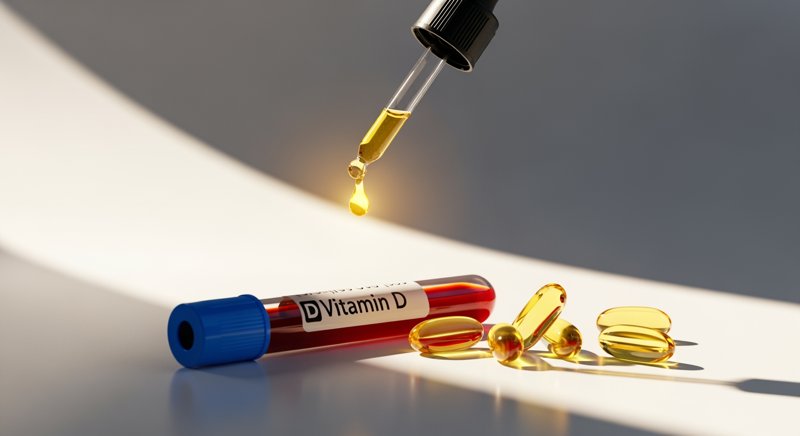
Vitamin D: What Is the Real Norm and How to Correct Deficiency Without Mistakes
Hi! The Wizey AI team is here. Today we’re talking about the real rock star of the nutrient world—Vitamin D. It’s trumpeted from every corner: it saves you from depression, boosts immunity to the skies, and makes bones made of steel. As a result, pharmacies are stocked with jars of various dosages, and people’s heads are full of confusion.
How much should you take? Do you need a break for the summer? And if I take 10,000 IU a day, as a trendy blogger advises, is that normal? Let’s sort out this sunny issue once and for all, relying on science, not hype. We will go through the whole journey: from understanding what this substance is to blood tests and proper correction.
What Is Vitamin D in Simple Terms and Why Is It Not Quite a Vitamin?
In short, Vitamin D is a fat-soluble substance that regulates calcium and phosphorus metabolism in the body. But in reality, it is not just a vitamin in the classical sense, but a steroid prohormone. “Pro” means precursor. That is, it is the raw material from which our body produces the active hormone calcitriol.
Unlike, say, Vitamin C, which we can only get from food, our body knows how to synthesize Vitamin D on its own. Under the influence of ultraviolet B (UVB) rays, a complex chemical process is launched in our skin. Next, the Vitamin D “semi-finished product” is sent for refinement to the liver, and then to the kidneys, where it turns into that very active hormonal form. It is this form that does all the main work: helps calcium be absorbed in the intestine, strengthens bones, and participates in the work of the immune, nervous, and muscular systems.
There are two main forms:
- D2 (ergocalciferol) — of plant origin.
- D3 (cholecalciferol) — of animal origin, and this is the one synthesized in our skin. It is considered more effective for replenishing deficiency.
Vitamin D Norms in Tests: What Numbers to Aim For?
The optimal level of Vitamin D in the blood (25(OH)D test) for adults is considered to be the range of 30–60 ng/mL (nanograms per milliliter). Values below 30 ng/mL indicate insufficiency, and below 20 ng/mL indicate a clear deficiency that requires mandatory correction under the supervision of a doctor.
It is important to understand that the numbers may fluctuate slightly depending on the season, and this is normal. In winter, the level predictably decreases, in summer — it increases. However, it should not go beyond the healthy range. Levels above 100 ng/mL are already considered potentially toxic and can lead to hypercalcemia—a dangerous condition where there is too much calcium in the blood.
Here is a simple table for reference (the most common references):
| Status | Level 25(OH)D, ng/mL | Level 25(OH)D, nmol/L* |
|---|---|---|
| Severe deficiency | < 20 | < 50 |
| Insufficiency | 20–30 | 50–75 |
| Adequate level | 30–60 | 75–150 |
| Possible excess | > 100 | > 250 |
| Toxic level | > 150 | > 375 |
*Sometimes laboratories use other units of measurement — nmol/L. To convert ng/mL to nmol/L, simply multiply the value by 2.5.
Why Does Vitamin D Deficiency Occur, Even If You Live in the South?
The main reason for deficiency is insufficient sunlight, or rather, UVB rays reaching our skin. In many northern regions, from October to March, the sun shines at such an angle that UVB rays practically do not reach the Earth’s surface. This is the so-called “vitamin winter”.
But even in summer, everything is not so simple. Here are a few more key reasons for deficiency:
- Lifestyle. We spend 90% of our time indoors: office, home, car. Even on a sunny day, our skin simply does not receive the necessary dose of ultraviolet radiation.
- Use of sunscreens. And this is correct! Protecting against skin cancer is necessary. But you need to know that a cream with SPF 15 and higher blocks Vitamin D synthesis by 99%. This is not a call to give up SPF, but merely a statement of fact.
- Geography and ecology. In large cities, smog and dust can also scatter UVB rays, reducing their effectiveness.
- Physiological features. Dark skin color (melanin acts as a natural sunscreen), old age (the skin’s ability to synthesize decreases significantly), obesity (Vitamin D is fat-soluble and can be “deposited” in adipose tissue, becoming unavailable to the body).
- Health problems. Bowel diseases (Crohn’s disease, celiac disease), liver and kidney diseases can disrupt the absorption or conversion of Vitamin D into its active form.
When Deficiency Is a Cause for Concern: Symptoms and “Red Flags”
The insidiousness of Vitamin D deficiency is that it is often asymptomatic or masquerades as ordinary fatigue. However, there are a number of non-specific signs that may indicate it, especially if they appear in combination and over a long time.
Pay attention to the following “bells”:
- Chronic fatigue and weakness, even after a full sleep.
- Frequent colds (ARVI), since Vitamin D is an important modulator of the immune response.
- Pain in bones, joints, and muscles, especially in the lower back.
- Depressed mood, apathy, seasonal blues.
- Hair loss.
- Slow wound healing.
The appearance of one of these symptoms is not a reason to diagnose yourself. But if you recognize yourself in 2-3 points and your analysis shows a level below 20 ng/mL, this is already a serious signal that cannot be ignored. And when you have a whole bunch of such non-specific complaints, from headaches to muscle weakness, it is easy to get confused. By the way, it is for such cases, to help sort everything out and understand which specialist is best to discuss this “mixed bag” with, that our assistant Wizey AI was created. It helps to see the connections between different indicators in your tests and symptoms.
How to Correct Vitamin D Levels Properly: A Step-by-Step Plan
So, you took the test and saw a number far from ideal. What to do? The main thing is not to run to the pharmacy for the largest dosage.
- Step 1. No panic and self-medication. Your starting point is the result of the 25(OH)D analysis. Taking high doses “for prevention” or because “everyone drinks it” is a bad idea.
- Step 2. With results — to the doctor. Only a doctor (therapist or endocrinologist) can competently calculate the dosage you need. There are prophylactic doses (usually 600–2000 IU per day) and therapeutic (can reach 50,000 IU per week for several weeks). Prescribing therapeutic doses is exclusively a medical prerogative.
- Step 3. Choice of form and intake. Drugs come in the form of oil or aqueous solutions, capsules, tablets. Since Vitamin D is fat-soluble, it is recommended to take it with food containing fats (for example, with avocado, nuts, olive oil) for better absorption.
- Step 4. Control analysis. 2-3 months after starting therapeutic doses, it is necessary to retake the analysis to assess the dynamics and adjust the dosage. Perhaps the doctor will transfer you to a maintenance dose.
Top Mistakes When Taking Vitamin D: How Not to Harm Yourself
On the way to normalizing Vitamin D levels, many are trapped by the same rakes. Let’s break them down.
- Mistake #1: Drinking “like a friend/blogger”. The dosage is selected individually based on your initial level in the blood, weight, age, and concomitant diseases. A dose that suited one may be insufficient or, conversely, excessive for another.
- Mistake #2: Forgetting about cofactors. For the proper metabolism of Vitamin D, other nutrients are also important, primarily magnesium and Vitamin K2. Magnesium is involved in the “activation” of Vitamin D, and K2 helps direct calcium specifically to bones and teeth, and not to the walls of blood vessels. When taking high doses of D, the need for them increases.
- Mistake #3: Taking a course and quitting. If you live in a northern climate, prophylactic intake of Vitamin D in the autumn-winter period is not a one-time action, but a constant support measure. After reaching the target level with therapeutic doses, it is necessary to switch to a maintenance dosage.
- Mistake #4: Relying only on food. Getting an adequate amount of Vitamin D from food is practically unrealistic. For example, to get a daily allowance of 1000 IU, you would have to eat 10 yolks or almost a kilogram of cod liver. This is, to put it mildly, difficult.
Mini-FAQ: Briefly about the Important
- Do I need to take Vitamin D in the summer?
- If you spend most of the day in the office and use SPF, then most likely yes. Perhaps in a smaller prophylactic dose. The best answer will be given by a control analysis at the end of summer.
- What time of day is best to take Vitamin D?
- There is no fundamental difference. The main thing is to take it with fatty food for better absorption. Many prefer to do this in the morning.
- Can you get an overdose from the sun?
- No, this is impossible. Our body has a smart self-regulation system: when a sufficient level is reached, synthesis in the skin simply stops.
- Is it necessary to take K2 and magnesium together with Vitamin D?
- When taking prophylactic doses (up to 2000 IU), this is not always critical, but desirable. When taking high therapeutic doses, it is strongly recommended, but the scheme should be selected by a doctor.
Conclusion
Vitamin D is undoubtedly an important element of our health, and its deficiency in our latitudes is the rule rather than the exception. But you need to approach its correction wisely: without fanaticism, based on tests and under the supervision of a specialist.
As of early 2026, the Endocrine Society still considers 30 ng/mL the minimum sufficient level, though growing evidence supports aiming for 40-60 ng/mL for optimal outcomes. Understanding test results, understanding how Vitamin D levels relate to other indicators, and preparing for a productive conversation with a doctor can be difficult. If you have already received your results and want to better understand the picture of your health, upload them to Wizey AI. Our system will help analyze the data, identify possible relationships, and suggest what to look for at the doctor’s appointment.
Take care of yourself and be healthy!